
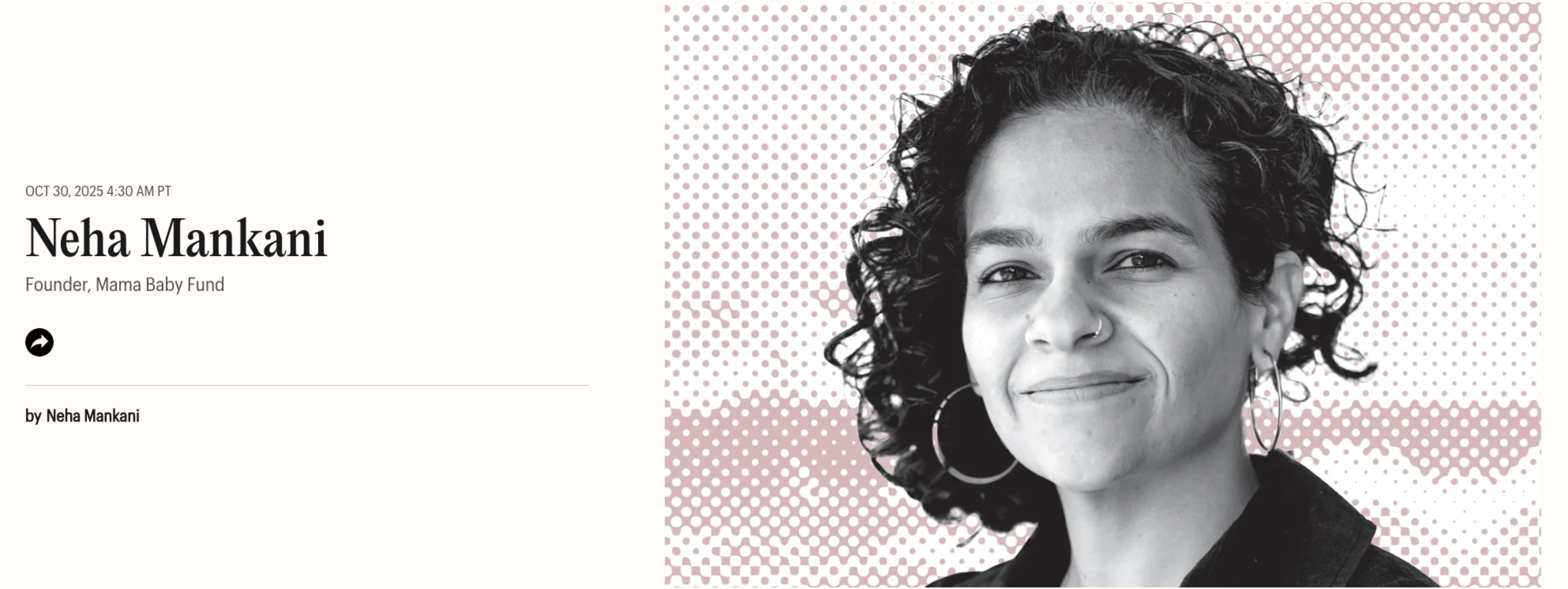
TIME Names Neha Mankani to 2025 List of Top 100 Climate Change Leaders
The QMNC Research Alliance celebrates Neha Mankani’s recognition on TIME’s 100 Climate Leaders list, honouring her remarkable work at the intersection of midwifery, climate action, and humanitarian response. Based in Pakistan, Mankani has long been a leading voice for reproductive, maternal, and newborn health in crisis settings. Through her leadership with the Mama Baby Fund and her extensive on-the-ground work following floods, heatwaves, and other climate emergencies, she has demonstrated how midwives are often the first responders when climate disasters strike—providing care, safety, and stability for women and newborns in the most vulnerable conditions.
| Mankani’s advocacy extends far beyond national borders. She has become a global advocate for midwifery’s essential role in climate resilience, emphasizing that strengthening midwifery services is not only a health imperative but also a climate adaptation strategy. Her voice has resonated in global forums, where she has underscored the need for investment in local midwives and community health systems that can withstand environmental and humanitarian shocks. By connecting maternal and newborn health outcomes to broader issues of climate justice, she continues to shape the global discourse on what effective, equity-driven response truly looks like. |
Neha Mankani, midwife and founder of the Mama Baby Fund, shares her experience delivering sexual, reproductive, maternal, adolescent, and newborn health services to populations affected by Pakistan's 2021 floods. Janet Jarman (Birth Wars) was co-producer, director, and co-cinematographer for this project. Not loading? Try this link. |
Alongside her advocacy, Mankani has developed a substantive body of research and practice-focused publications exploring the intersection of climate change, health systems and reproductive health. Her collaborative projects, public-facing articles and interviews, and programme reports highlight the gendered dimensions of climate vulnerability and the systemic barriers midwives face in delivering care during emergencies. Through this mixture of evidence, training and advocacy, she contributes practical and policy-relevant guidance that strengthens the foundation for climate-informed maternal and newborn health globally. The QMNC Research Alliance is proud to celebrate Neha’s leadership and her continued commitment to advancing quality care research and advocacy.