

November QMNC Research Roundup
QMNC Members have shared several new and important papers this month, with disruption as a common theme.
Humanising Birth and the Salutogenic Foundations of Lifelong Well-Being
A new volume of collective scholarship aims to shape the global response to the maternity care crisis.
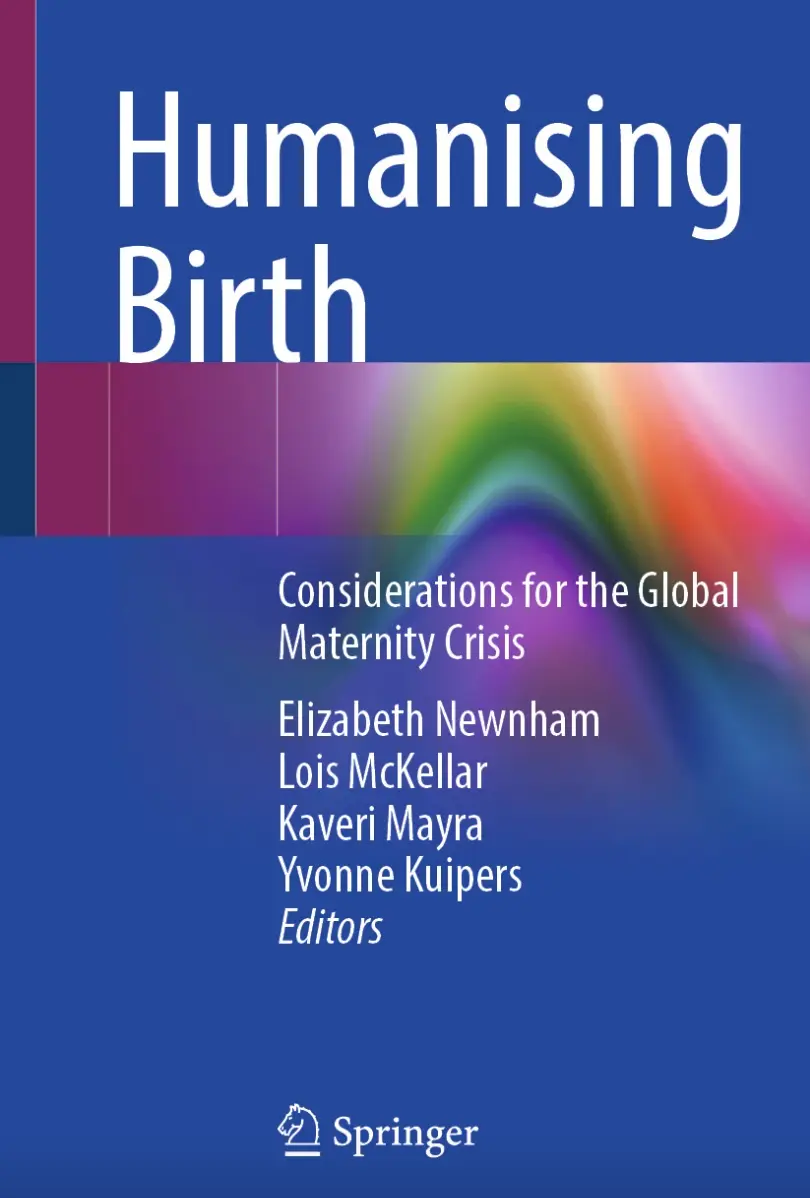 Elizabeth Newnham brought the just-released trans-disciplinary academic book Humanising Birth: Considerations for the Global Maternity Crisis to our attention, noting:
“This book develops on how, with the birth of every baby, comes the possibility of love, connection, and optimal health and well-being. It shows how the salutogenic pathways that are set up at the start of life are not only for the short term but throughout life, and into the next generation.”
Edited by Newnham, Lois McKellar, Kaveri Mayra, and Yvonne Kuipers, the book has chapters organized into three sections: Humanizing Systems, Humanizing Care and Humanizing Experience. A number of QMNC members are chapter authors including Céline Lemay, Allison Cummins, Rodante van der Waal, Kaveri Mayra, Liz Newnham, Mary Renfrew, Sheena Byrom, Marie Berg, Susana Ku Carbonell, Romina Gallardo, and Priya Sharma. The final chapter is brought to us by a team of researchers including new QMNC members Doreen Balabanoff, Anka Duer, and J. Davis Harte, who joined last month after the Transforming Birthspace Global Colloquium and started a new special interest group to continue their collaboration.
Continue the discussion here.
Building Equitable Global Midwifery Partnerships
Bidirectional collaboration can disrupt extractive practices and strengthen midwifery-led care
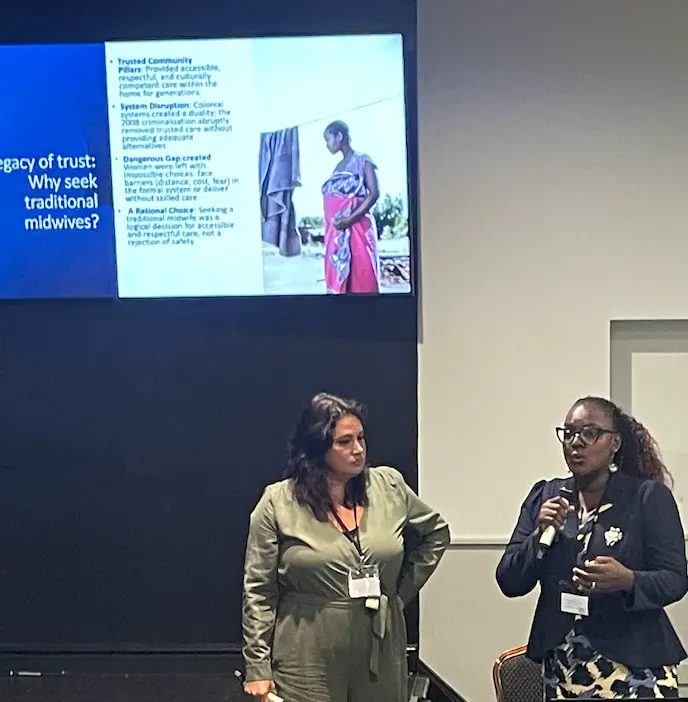 The International Labour and Birth Research Conference in September included a keynote presentation from Scovia Malinda and Rachel Maslow, ”All of Us or None of Us” on midwifery-led care in Uganda. With Michelle Telfer and colleagues, they have authored an “Innovations from the Field” article in the Journal of Midwifery and Women’s Health, “Building Effective and Equitable Global Midwifery Collaborations: Research, Education, and Clinical Learning," which Michelle has shared with us in the live-feed. The article describes the partnership between Yale School of Nursing and Midwifery, Makerere University College of Health Sciences, and Mother Health International community birth center in Atiak, Uganda in an effort to address the unintended harm caused by the unidirectional movement of ideas, practice and protocol from the Global North to the Global South. Outputs of the partnership include the Coursera MOOC “Global Quality Maternal and Newborn Care”, designed around the QMNC Framework.
Continue the discussion here.
Protecting the Distinctiveness of Nursing and Midwifery
Commentary warns that a proposed ISCO reclassification threatens workforce integrity, data quality, and progress towards global SRMNAH targets.
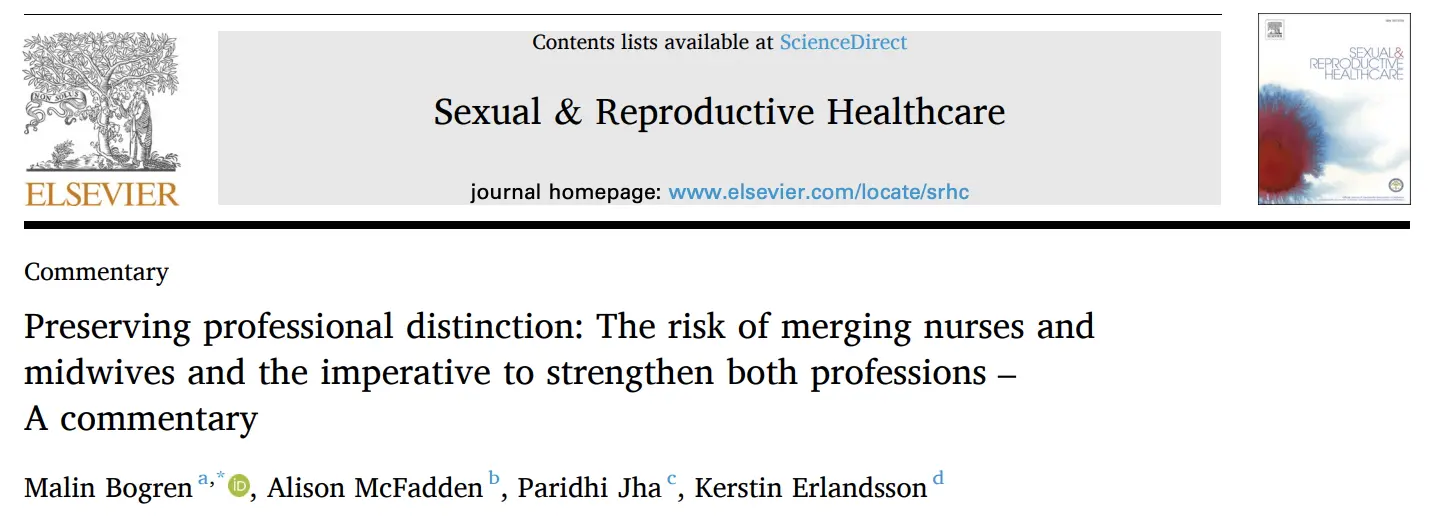 Malin Bogren and Alison McFadden both shared “Preserving professional distinction: The risk of merging nurses and midwives and the imperative to strengthen both professions – A commentary” in Sexual Reproductive Healthcare. This call to action to preserve nursing and midwifery “as distinct, equally essential professions” is in response to a proposal to create a subcategory of “nurse-midwives” in the revised International Standard Classification of Occupations (ISCO). Bogren et al argue “that such a classification threatens the integrity of health workforce data, undermines midwifery-led models of care, and compromises efforts to meet global targets for sexual, reproductive, maternal, newborn, and adolescent health.”
Continue the discussion here.
Doula Disruption as a Catalyst for System-Level Improvement
Analysis identifies how doula 'disruptions' can strengthen care, support clinicians, and drive systemic change.
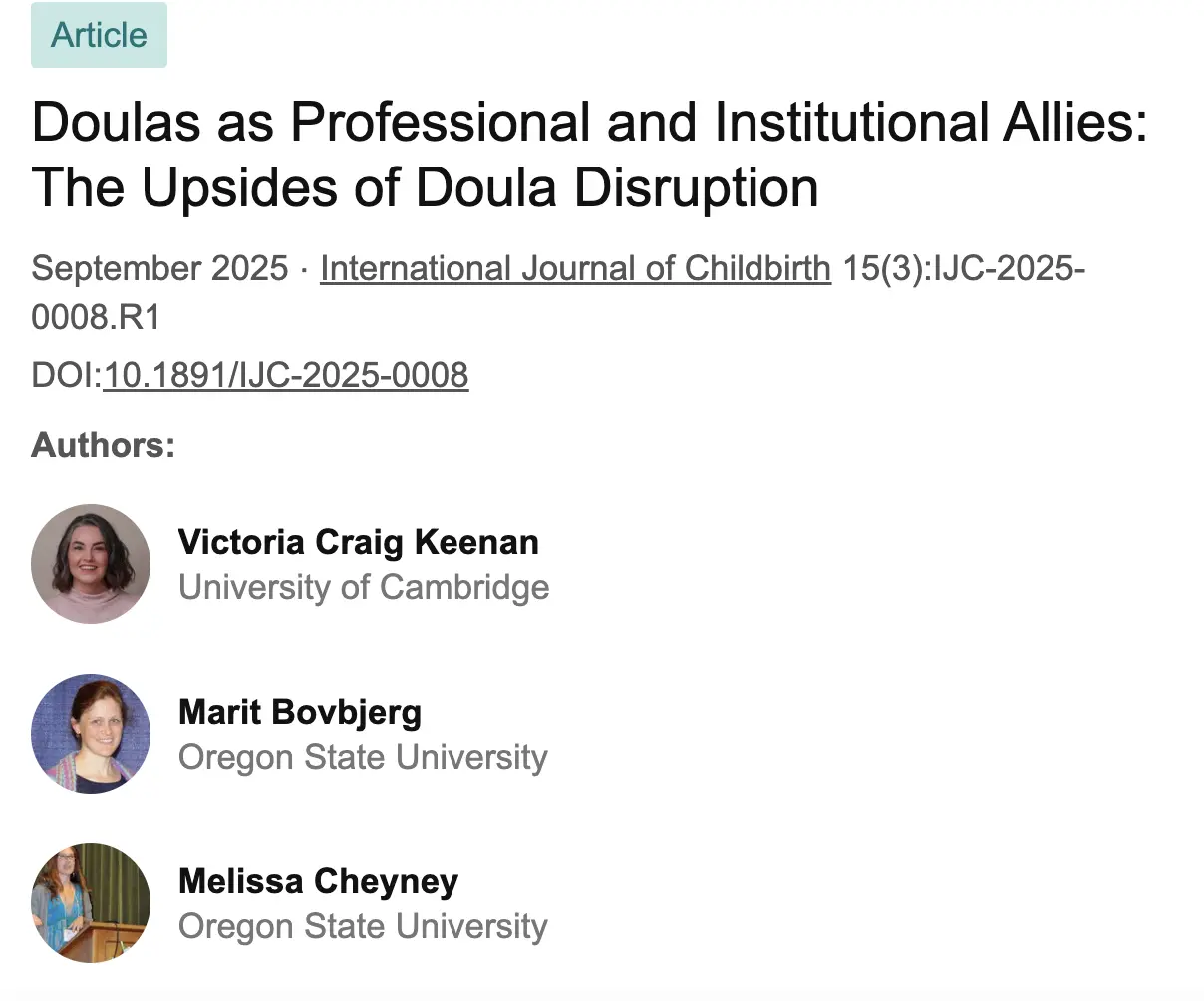 Finally, Victoria Craig Keenan has shared “Doulas as Professional and Institutional Allies: The Upsides of Doula Disruption” in her Portfolio. Co-authored with Marit Bovbjerg and Melissa Cheyney, this mixed-methods study examines barriers and opportunities for doula integration, as prioritized by the US government to help improve perinatal outcomes. They analyzed clinician characterization of doula-related “disruption.” And found that some disruptions “bridge and compensate for systemic gaps in care with positive implications for patients, clinicians, and institutions.” They conclude disruption of routinized care can be a productive practice through which doulas and clinicians work together to provide a viable solution to systemic challenges, ultimately improving care experiences and outcomes.
Continue the discussion here